
By 2026 every competitor has access to the same models. The returns go to the companies that can absorb machine intelligence into how they actually operate.
Walk into any boardroom in 2026 and AI is on the agenda. Walk into the operations of the same company and you will usually find something stranger: a dozen subscriptions, three pilots, one enthusiastic department, and a cost structure that looks exactly like it did in 2022. AI is everywhere, and yet in most organisations it has changed almost nothing that a CFO would notice. The issue is no longer access to AI. Everyone has access. The issue is organisational absorption: whether a company can take intelligence that is suddenly cheap and route it into the workflows where it compounds.

This article is about that gap. Not model releases, not benchmarks, not predictions. The transition happening underneath the news, and what it demands from the people who run companies.
This Is No Longer a Chatbot Story
The chat window was the first consumer wrapper around large models, and it still shapes how most executives picture the technology: a clever assistant you type at. That picture is now misleading. The interface was never the point. The point is that reading, writing, classifying, extracting, summarising, and drafting, the core mechanical operations of knowledge work, can now be performed by software at near-zero marginal cost.
The consequential deployments in 2026 rarely look like chat. They look like an accounts-payable pipeline that extracts line items from ten thousand supplier invoices a month, flags the 3% that disagree with purchase orders, and routes only those to a human. They look like an internal retrieval system that answers “have we dealt with this clause before?” from twenty years of contracts in seconds instead of a two-day email chase. They look like a support operation where the model drafts the resolution, checks it against policy, and escalates the genuinely ambiguous cases with a summary attached. They look like engineering teams where maintenance work, dependency upgrades, test coverage, migration scaffolding, is increasingly generated and reviewed rather than typed.
None of this is science fiction, and none of it is a chatbot. It is workflow plumbing. It is boring in exactly the way that electricity became boring: invisible, load-bearing, and decisive.
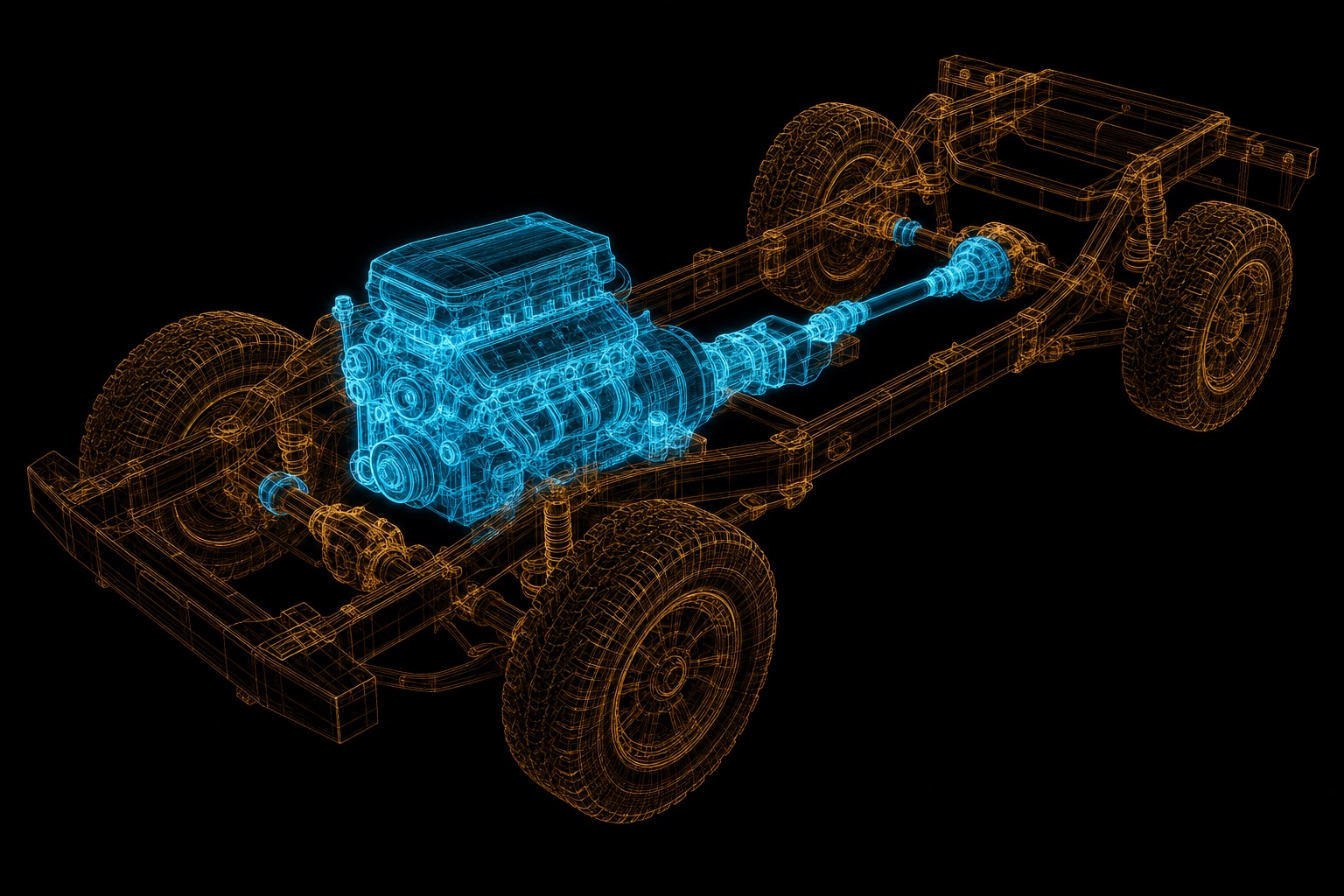
The Model Is the Engine. The Business System Is the Vehicle.
Frontier models matter. But an engine on a workbench moves nothing. What moves is a vehicle: the engine plus transmission, steering, brakes, fuel supply, and a driver who knows the route. In business terms, the transmission is integration with your systems of record. The steering is domain-specific workflow design. The brakes are evaluation, review, and escalation. The fuel supply is your data, cleaned and permissioned. The driver is a named owner accountable for outcomes.
This distinction explains an otherwise puzzling fact: model capability has been improving steadily for years while most corporate AI returns have not. Project NANDA, an MIT Media Lab-affiliated group, put a number on it in a widely circulated 2025 report:
“Just 5% of integrated AI pilots are extracting millions in value, while the vast majority remain stuck with no measurable P&L impact. This divide does not seem to be driven by model quality or regulation, but seems to be determined by approach.” — Project NANDA, The GenAI Divide: State of AI in Business
A caveat on that figure, because precision matters more than a punchy stat: this report is not a peer-reviewed MIT study, it is a self-described “preliminary findings” working paper, and it has drawn substantial criticism since publication. Wharton professor Kevin Werbach and multiple industry analysts have noted the headline 95%/5% split appears in the report without the underlying data to support it. The figure rests on 52 interviews and 153 survey responses, smaller than the “150 interviews, 350 employees” some outlets cited. The report measures failure within a six-month P&L window, arguably too short for enterprise AI returns to show up. And the report’s own recommended fix is Project NANDA’s paid agentic-AI membership programme, a commercial interest the authors do not fully separate from their conclusions. None of that means enterprise AI absorption is fine, the McKinsey data below points at the same underlying pattern with cleaner methodology, but treat “5%” as directionally suggestive, not a precise, verified number.
Read that carefully regardless of the exact percentage. Not model quality. Not regulation. Approach. The engine is rapidly becoming a commodity; several vendors will sell you a very good one, and the price per unit of capability keeps falling. The vehicle, the business system wrapped around the engine, cannot be bought. It has to be built inside your organisation, out of your data, your processes, your permissions, and your people. That is where durable advantage now lives, precisely because it is the part competitors cannot copy by signing the same contract.
The New Divide: Who Can Absorb AI
For twenty years the strategic question about new technology was “who has it?”. That question is now nearly worthless for AI, because the answer is everyone. The question that separates companies is “who can absorb it?”.
Absorption capacity is concrete. It means your data is accessible and someone can grant a system permission to read the contract archive without a six-month security review. It means your processes are documented well enough that you can point at the step where a model should sit. It means your middle managers see AI-assisted workflows as capacity rather than threat. It means legal and compliance can approve a bounded use case in weeks. It means somebody senior owns the outcome and can change the process, not just procure the tool.
Two companies with identical AI budgets will diverge wildly on these dimensions. One deploys document intelligence into claims processing in a quarter because the claims workflow was already mapped, the data warehouse was already governed, and the head of operations wanted it. The other buys the same product and eighteen months later it is a demo environment nobody logs into, because every integration request died in a queue. Absorption capacity, not tooling, is the board-level variable. It deserves the same scrutiny boards give to balance-sheet leverage, because it determines how fast the company can convert a falling input cost into margin or growth.
The Collapsing Cost of Cognitive Work
Underneath everything else is a repricing. The unit cost of a large class of cognitive tasks, first-draft research, document review, data extraction, report assembly, routine analysis, standard correspondence, boilerplate code, is collapsing. Not to zero, and not for every task: judgement, accountability, relationships, and taste remain stubbornly human and stubbornly expensive. But the mechanical middle of knowledge work is being repriced the way spreadsheets repriced manual bookkeeping.
Be careful with what this does and does not imply for labour. It does not mean analysts, lawyers, or engineers disappear; spreadsheets did not eliminate accountants, they eliminated ledger arithmetic and multiplied what one accountant could oversee. It does mean that a workflow designed around expensive human reading, a procurement team manually comparing supplier terms, a compliance function sampling 5% of transactions because reviewing all of them was unaffordable, is now designed around a false constraint. When review becomes cheap, you review everything and staff humans on the exceptions. When drafting becomes cheap, the bottleneck moves to deciding and verifying. Companies must redesign work around the new cost curve, not run the old process with a faster typist.
McKinsey’s global survey work reaches the same conclusion from the other direction:
“The value of AI comes from rewiring how companies run, and the latest survey shows that, out of 25 attributes tested for organizations of all sizes, the redesign of workflows has the biggest effect on an organization’s ability to see EBIT impact from its use of gen AI.” — McKinsey, The State of AI: How Organizations Are Rewiring to Capture Value
Out of twenty-five attributes tested, workflow redesign beat everything, including which model was used. The same survey found only about a fifth of AI-using organisations had fundamentally redesigned any workflow at all. That is the gap between adoption and absorption, measured.
The Threat Is Not Replacement. It Is Tempo.
Executives are routinely asked to worry about being replaced by AI. The nearer and more realistic threat is being out-executed by a competitor with the same headcount and better AI workflows.
Picture two mid-sized firms competing for the same enterprise deal. In the first, a proposal takes two weeks: a partner sketches the approach, associates assemble precedents, someone reconciles pricing against three old spreadsheets. In the second, a system drafts the proposal from the firm’s own past wins, current rate cards, and the client’s stated requirements in an afternoon; the partner spends two days improving the thinking instead of assembling the document. The second firm does not just respond faster. It responds to more tenders, tests more pricing structures, learns from more outcomes, and its best people spend their hours on the 20% of work that actually differentiates. Run that difference for eight quarters and it stops looking like productivity and starts looking like market share.
Operational tempo compounds quietly. There is no press release for “our board pack now takes one day instead of six” or “our engineers spend 30% less time on maintenance”. There is only, eventually, a competitor whose costs are lower, whose cycle times are shorter, and whose margins fund the next round of investment. That is the executive threat model: not science fiction, arithmetic.
If You Are Firing People, AI Is the Excuse, Not the Reason
One more thing needs saying plainly, because it is the single biggest reason AI is resented inside companies. Layoffs announced “because of AI” are, in almost every case, layoffs that were coming anyway: over-hiring, margin pressure, a strategy correction. The technology makes a convenient press release because it sounds like progress instead of a mistake. But cutting headcount is not what using AI means, and treating it as the point poisons absorption at the root. The middle managers and domain experts whose cooperation every workflow redesign depends on will not document their processes, share their evaluation criteria, or route their work through a new system if they believe the output of that effort is their own redundancy. They are not wrong to withhold it, and no memo about “embracing change” will convince them otherwise.
The economics point the other way in any case. The spreadsheet did not eliminate accountants; it eliminated ledger arithmetic and multiplied what one accountant could oversee. Cheap intelligence removes the mechanical middle of knowledge work, which means the constraint moves to judgement, verification, and the exceptions, all of which need people who know the business. The companies absorbing AI well are redeploying their people onto the review steps, the edge cases, and the work the old cost structure could never afford, and they are saying so out loud, credibly, early. If your first AI initiative is a headcount reduction, you have not built an AI strategy. You have found a modern-sounding name for an old decision, and you have taught your own organisation to fight the next one.
The Wrong Question: What AI Tool Should We Buy?
Most failed AI programmes fail at the moment of framing, long before any technology is involved. They are framed as software procurement: gather requirements, run a vendor bake-off, negotiate seats, roll out licences, count logins. Procurement is how companies buy commodities, and it works when the value is in the product. With AI the value is mostly not in the product. It is in the redesigned workflow around the product, which no vendor can ship.
This is why tool sprawl is the signature failure mode of 2024–2026: a copilot here, a transcription tool there, an enterprise chat licence for everyone, each individually defensible, collectively amounting to a rounding error on output. Individual employees get modestly faster at tasks that were never the bottleneck, while the processes that actually constrain the business, contract turnaround, claims cycle time, engineering release cadence, month-end close, remain untouched because touching them requires process redesign, data access, integration, evaluation, and an owner. Buying tools is easy precisely because it changes nothing.
There is a simple test for whether an AI initiative is real: does it have a named owner, a workflow it replaces or reshapes, access to production data, a defined review step, and a metric that finance would accept? If the answer is a licence count, it is procurement wearing a strategy costume.

Intelligence Is Not Automation. Know Which One You Need.
There is a category error underneath a great deal of wasted AI spend, and it is easy to make because both things now arrive in the same box. Automation is what you want when a task is the same every time: same inputs, same steps, same correct answer, forever. Intelligence is what you want when the task genuinely varies and a judgement call has to be made under conditions that were not fully specified in advance. A vending machine and a concierge solve different problems, and paying a concierge’s wages to dispense crisps is not an efficiency gain.
The expensive version of this mistake looks productive, which is what makes it durable. A company routes a fixed, repeatable extraction task, the same three fields from the same invoice template, through a large model on every single document, forever, because someone called it “the AI solution.” It works. It also costs more per document than a rule ever would, runs slower, and will occasionally return a different answer to the identical input for no reason a human can audit, because that is what probabilistic systems do. Somewhere in the business a deterministic script could have done the job for a fraction of the cost with a fraction of the failure modes, and nobody built it because building a rule felt old-fashioned next to buying a model.
The correct pattern is to use intelligence to engineer the automation, not to replace it. Point the model at a few thousand historical examples once, at design time, and have it find the pattern, write the extraction logic, and flag the genuine exceptions that do not fit the rule. Then deploy that as a fast, deterministic, auditable pipeline that runs the same way every time it should, and keep the model in the loop only for the residual cases that actually vary. The intelligence did its job upstream, at the moment of design, where judgement was needed. The automation does its job downstream, at the moment of execution, where consistency and cost matter more than judgement. Confuse the two domains and you either pay a probabilistic system to do a deterministic job badly, or you spend a year hand-coding a rules engine for a task that will never stop producing exceptions because the underlying decision was never actually mechanical.
This is precisely the distinction most C-suites are not equipped to make on their own, and there is no shame in that: it is a systems-architecture judgement, not a leadership one. It is exactly what a competent CTO is for, and it belongs explicitly in their brief, not left implicit in a vendor’s pitch deck. The question to ask before funding anything is simple: does this task look the same on the hundredth run as it did on the first? If yes, you need automation, possibly designed with the help of intelligence. If no, you need intelligence, possibly wrapped in enough automation to make it usable at scale. Getting this backwards is how a company ends up with a rules engine and a language model quietly doing each other’s jobs, both of them furious about it, and nobody able to say why the budget doubled.
The Right Question: Which Parts of the Business Should Become More Intelligent?
The productive framing starts from the business, not the technology. Where is intelligence expensive in our company? Where are decisions slow because information is trapped in documents? Where does work queue behind a handful of experts? Where do we sample instead of inspect because inspection was unaffordable?
Asked that way, the map draws itself, and it is different for every company. A distributor finds that procurement analysis is the choke point: thousands of supplier documents, price changes buried in PDFs, one overworked category manager. An insurer finds it in claims and policy review. A law firm finds it in precedent retrieval and first-draft production. A software company finds it in the unglamorous 60% of engineering time that goes to maintenance, triage, and comprehension of old code rather than new features. A listed company finds it in the two weeks each quarter that senior staff spend assembling board and regulatory reporting from systems that do not talk to each other.
Notice what these have in common: they are not “AI use cases” in the vendor-deck sense. They are places where the business pays heavily for reading, comparing, and drafting, and where cheap intelligence changes the economics of the whole process. The right question yields two or three of these, not thirty. Depth beats breadth, because the first deeply rebuilt workflow teaches the organisation how to build the second, and that learning is the real asset.
From AI Experiments to AI Operating Capacity
Getting from pilots to operating capacity is mostly organisational work, and two pieces of it deserve more attention than they get: governance and memory.
Governance first, because it is usually done wrongly in one of two directions. Careless AI is genuinely dangerous: models given unreviewed authority over customer communications, confidential data pasted into consumer tools, decisions with no audit trail. But the more common failure in large organisations is the opposite: a review board that meets monthly, blanket bans while “policy is being developed”, risk processes imported wholesale from systems that make irreversible decisions and applied to systems that draft documents a human will read anyway. Both extremes lose. Good governance is an enabling specification: which uses are pre-approved, which require review, and which are prohibited; what level of human sign-off each workflow needs; what gets logged so decisions can be audited; where private data may and may not flow; who to escalate to when the system is uncertain; and what outcomes are measured. Written that way, governance is what allows a team to move fast, because the boundaries are known in advance. The EU AI Act’s risk-tier logic, whatever one thinks of its details, gets the shape right: proportion the control to the consequence of the use, not to the novelty of the technology.
Memory second, because it is the least discussed and possibly the most valuable. Most AI usage today is amnesiac: an employee gets a good output, ships it, and the prompt, the correction, the judgement about what “good” looked like evaporates. Multiply that by a thousand employees and the organisation is running an expensive tutoring programme for models while learning nothing itself. The companies compounding advantage treat every AI workflow as an asset that accretes: prompts and templates versioned like code, evaluation sets built from real cases, corrections fed back into the system, decisions and exceptions documented where the next person can find them. The output of a mature AI workflow is not just the invoice processed or the proposal drafted. It is an organisation that is measurably better at processing invoices and drafting proposals than it was last quarter, in a way that survives any individual employee leaving. Institutional memory is the moat, because it is the one component of the vehicle that appreciates.

Leadership Changes Shape, Not Owner
None of this requires the CEO to become a prompt engineer, any more than the spreadsheet era required CEOs to write macros. It requires something harder: the willingness to treat the cost of intelligence as a variable rather than a constant when thinking about the business.
The leadership skill of this period is diagnostic. Where is expertise a bottleneck, one underwriter, one senior engineer, one partner through whom everything flows? Where do documents pile up? Which decisions are slow because synthesis is slow, not because the decision is hard? Where would our best people create ten times the value if the mechanical 70% of their job were lifted? Executives who can ask those questions precisely will make good AI decisions almost automatically. Executives who cannot will outsource the thinking to vendors, and get vendor answers.
This is also why the best AI strategy is not an AI strategy. A standalone AI strategy document is a symptom of the procurement framing, technology looking for justification. What works is the existing business strategy, rewritten under a new constraint set: intelligence is cheap, reading is cheap, drafting is cheap, and your competitors face the same new physics. If your strategy says “win on service”, the AI question is what service becomes when every interaction can be informed by everything the company knows. If it says “win on cost”, the question is which of your processes still price human reading at 2019 rates. The strategy stays. The assumptions underneath it do not.
What CEOs Should Do Now
A practical sequence, compressed from what the minority of organisations actually absorbing AI have in common. None of it is a sprint. Absorption is a change in how the company operates, closer to a lifestyle change than a diet, and it is paced accordingly: steady, measured, and permanent.
- Start with yourself.
The flow starts at the top and runs downward, and you are the starting point. If you cannot work with these systems personally, your company will have the same problem at scale. This does not mean becoming a prompt engineer. It means using AI on your own actual work, a board pack, a first draft, a summary of a long document, until you know first-hand what it is reliably good at and where it fails. An executive who has never used the technology can only manage it by rumour, and both enthusiasm and scepticism travel downward through an organisation at remarkable speed. - Go and find out where the actual bottlenecks are before you fund anything.
Walk the business and list the ten processes where documents, reviews, or reports genuinely pile up waiting for a person to get to them, and put a real number on the hours and days each one costs. This takes about two weeks. It is worth more than any strategy offsite, because everything you approve afterward should trace back to one of these ten lines, not to a vendor’s slide. - Find the people your company cannot function without, and talk to them before you talk to any vendor.
Every organisation has an underwriter, a senior engineer, or a partner that everything routes through eventually. They are your constraint, but do not treat them as an obstacle to route around. They are the only people who can tell you what a correct answer actually looks like in their domain, and if you build a workflow without them you will find out what they knew the first time it hits a case they would have caught. - Split the groundwork across your C-suite, and put the transition on a scoreboard, not a deadline.
Absorption is not one person’s job. Your CIO or CISO owns data access and permissions, which is where most AI projects quietly die: ask them for a specific inventory of which systems hold the documents a given workflow needs, who currently has read or write access, who has the authority to grant a new system access to that data, and how long the approval path actually takes end to end. Your CTO owns integration and build feasibility: whether the model can actually reach the systems of record, what has to be built versus bought, and what the maintenance burden looks like once it is live. Your CFO owns the money and the scoreboard: what a workflow costs to run at scale versus the hours or cycle time it removes, which of the existing subscriptions to kill, and the definition of “value” that finance will actually sign off on, so success is measured in throughput and error rates rather than seat counts. The CEO’s job is none of these individually. It is to sequence the work, hold each owner accountable for their piece, and track the transition in real time with metrics everyone can see, so a six-month security review or a doomed integration shows up as a visibly stalled number rather than a mid-pilot surprise. What the job is not: declaring a heroic deadline. A deadline makes this look like a project with an end date. It is a change in how the company operates, and executives who rush operating changes reliably make their worst decisions under exactly that pressure. - Rebuild two or three workflows properly. Do not touch thirty of them lightly.
Choose the ones where the friction is real, where you can tell a correct answer from a wrong one without an argument, and where a mistake will not sink the company while you are still learning. Then rebuild each one end to end, not as a pilot you can quietly retire later. A shallow pass across thirty workflows produces thirty demos and no results. A deep rebuild of three produces the proof, and the muscle memory, that makes the fourth one straightforward. - Decide what “correct” means before you switch anything on, not after it has already gone wrong.
Test the system against real historical cases where you already know the right answer, and design the human review step into the workflow from the first day, not as damage control once something has embarrassed someone. A review step bolted on afterward is not governance. It is an apology you have written in advance. - Put one senior person’s name on each workflow, and give them the authority to go with it.
They need to be accountable for the outcome, not just for renewing the licence, and they need the standing to actually change the process the system sits inside of. A workflow with no owner who can touch the process around it will sit there quietly failing to help anyone, and nobody will notice for months because nobody was ever on the hook for noticing. - Measure the thing your CFO would actually sign their name to, not the thing that looks good in a slide.
That means hours saved, error rates before and after, how many cases move through the workflow per week, how long a decision now takes from start to finish. If the only number your team can produce is “engagement” or “logins”, stop and be honest with yourself: you have built a toy, and no amount of enthusiasm turns a toy into a system before the load-bearing part underneath it, the one holding up your margins, quietly gives way. - Train your people in judgement, not in which button to click.
Knowing where the menu item is has never been the hard part. Knowing what these systems are reliably good at, where they quietly fail, and how to check their work before it goes out the door, that is the actual skill, and almost nobody in your company has been taught it yet, because until recently nobody needed it. - Go and count every AI subscription currently live in your company, because right now nobody can.
That alone tells you something. Kill the ones that overlap or that nobody can name a result for, and put the money you free up behind the two or three workflows you are actually rebuilding properly. A dozen scattered subscriptions and one underfunded deep rebuild loses to a competitor who did the opposite, every time. - Make sure every AI workflow leaves something behind when it is done.
The prompts that were used, the test cases that prove it works, the corrections someone made when it got something wrong, the reasoning behind the decisions that shaped it. Review these the way you would review code, because that is what they are: the accumulated knowledge of how your company actually does this work, and the one asset here a competitor cannot simply buy.
Cheaper Intelligence, Faster Learning, Better Memory
Strip away the noise of any given quarter’s model releases and the strategic picture of this era is stable enough to plan on. The cost of a large class of cognitive work is falling and will keep falling. The models that do this work are converging into commodities. The systems, workflows, and accumulated organisational knowledge wrapped around them are not commodities and never will be, because they are made of each company’s own data, processes, and judgement.
Which means the winners of the AI era will not be the companies with the most tools or the biggest model subscriptions. They will be the companies that redesign themselves around cheaper intelligence, faster learning, and better memory, and that treat the redesign as a change in how they operate rather than a race to an announcement. The companies that hurry will buy tools, issue press releases, and frighten their own staff. The companies that absorb will change how they work, measure it honestly, and let the compounding do the hurrying.
nJoy 😉