
Alex Hormozi sat with Steven Bartlett for nearly two and a half hours. Most clips will sell you three minutes of “reality is the moat.” This piece is the opposite: a lecture built from every business segment of the episode, in order, with the personal chapters (family history, romance, fatherhood, death, happiness) left out. Where Hormozi is sharp, we keep him. Where he overreaches, we argue. Where Sinek, Thiel, Collins, or Bezos already named the complementary half, we cross-link.
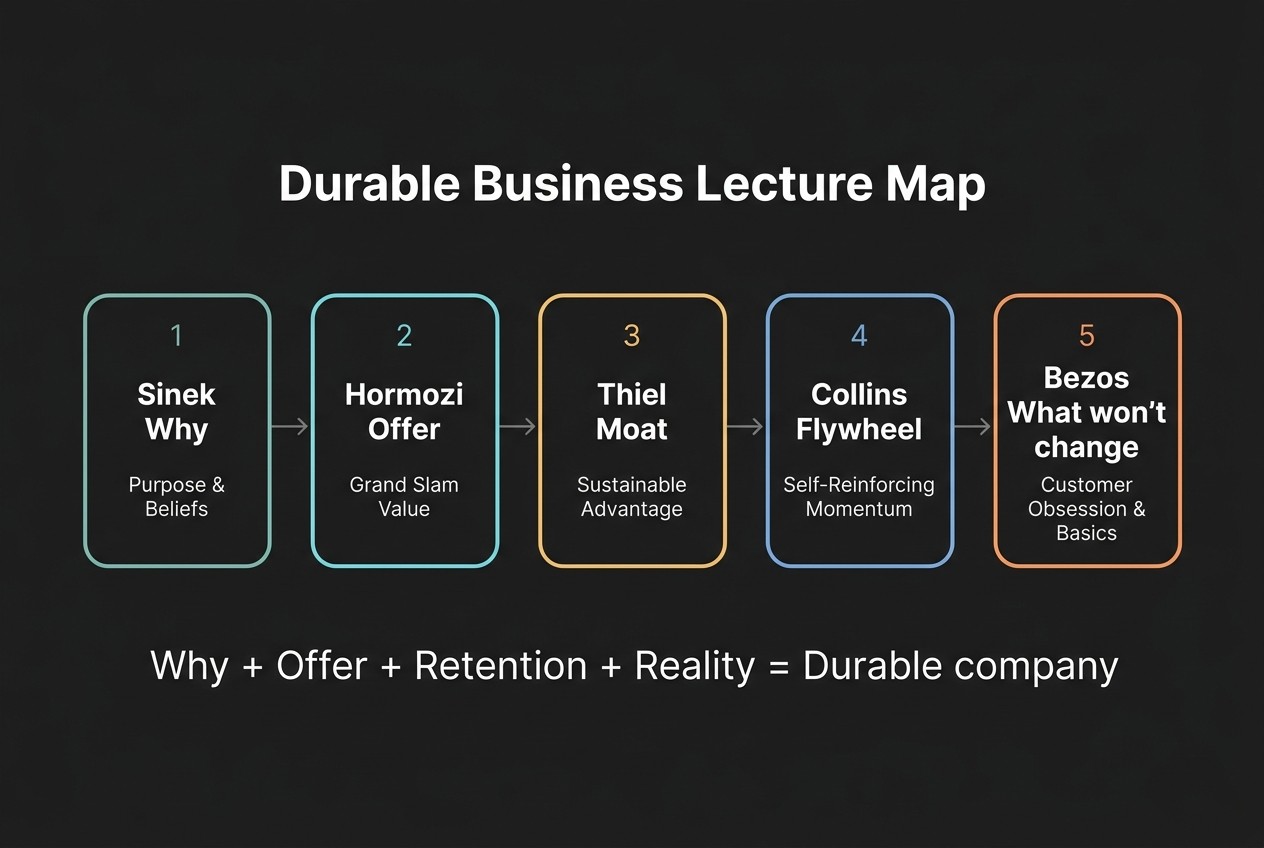
Primary source: Alex Hormozi on The Diary Of A CEO. Companion essay: You Are Not Behind.
AI as leverage, not identity
How to use AI as an entrepreneur · Where value comes from · Generating ideas without outsourcing judgment
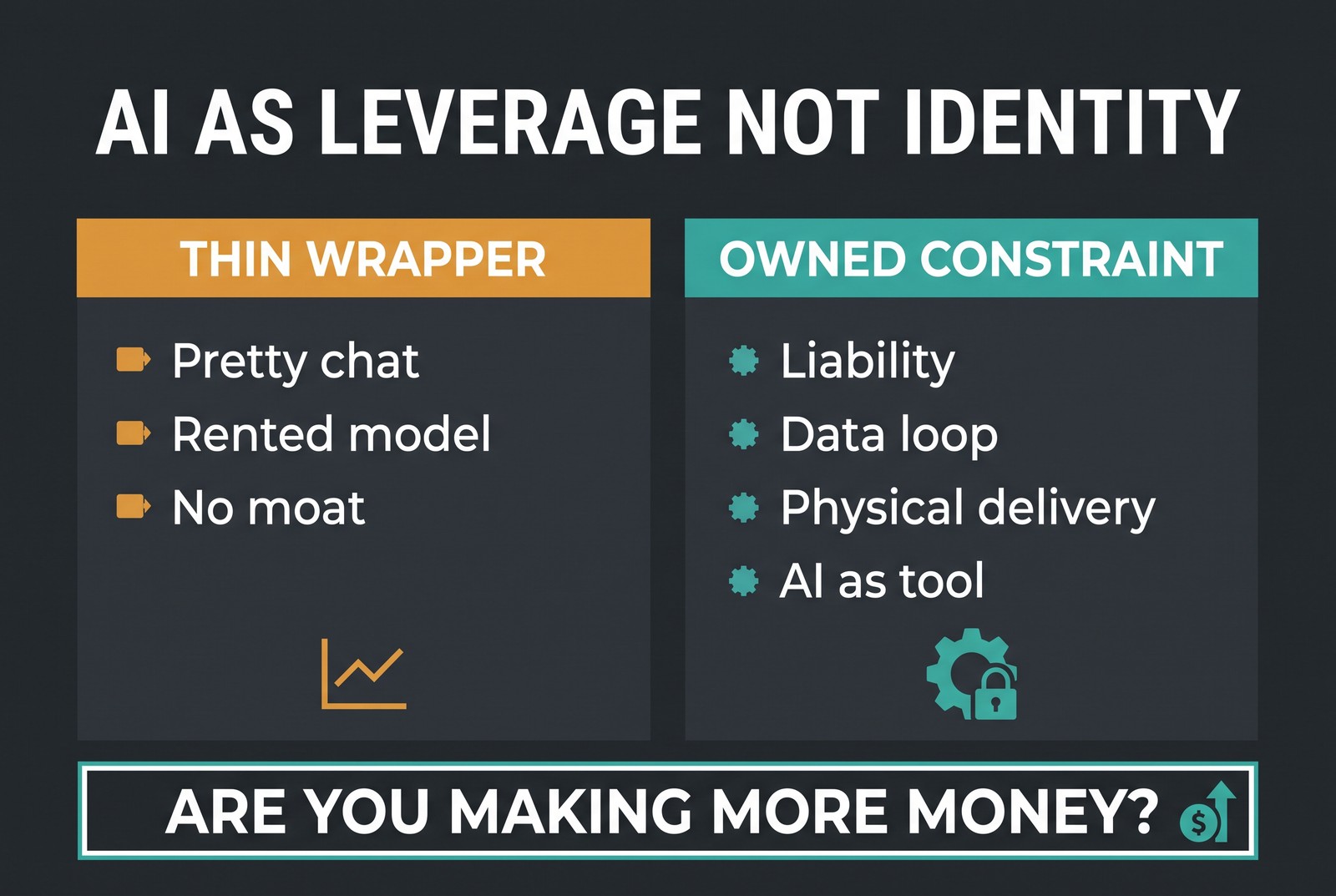
Hormozi’s filter is blunt: after all the tokens, are you making more money? He cites a firm that spent roughly $350k to replace about $11k/month of virtual assistants on work that was not the growth bottleneck. Demand was. If intelligence gets cheap, value concentrates in stakes and responsibility: someone owns the LLC and the downside. Models will agree with almost anything, so do not outsource the hardest thinking; use AI as a sparring partner, then decide yourself.
Argue back: the lesson is “do not automate a non-constraint,” not “never build an AI company.” Thin wrappers die. Liability, proprietary data loops, and physical delivery can still be durable.
This rhymes with Thiel without being identical:
“Monopoly is the condition of every successful business.” — Peter Thiel, Zero to One
Merits of the argument: the money filter and the “non-constraint” test are operationally strong; they stop founders from confusing novelty with progress. The stakes-and-liability claim is also sound under today’s law and capital markets. The weak edge is rhetorical overreach: treating every AI product as a wrapper ignores regulated workflows and data loops the public models cannot copy. Keep the filter; drop the slogan when you own a real constraint.
Time horizon and sticky growth
Long-term foundations · Why most firms stall before $10M · Pricing without selling out of your wallet
Build the tallest tower: five seconds yields one block; five years demands a foundation. The fastest path to $1M is not the path to $10M or $100M. Focus and patience win because they are anti-feed. Bezos’ version:
“you can build a business around things that are stable. One is low prices. Another is faster delivery. Vast selection.” — Jeff Bezos, Forbes interview (2012)
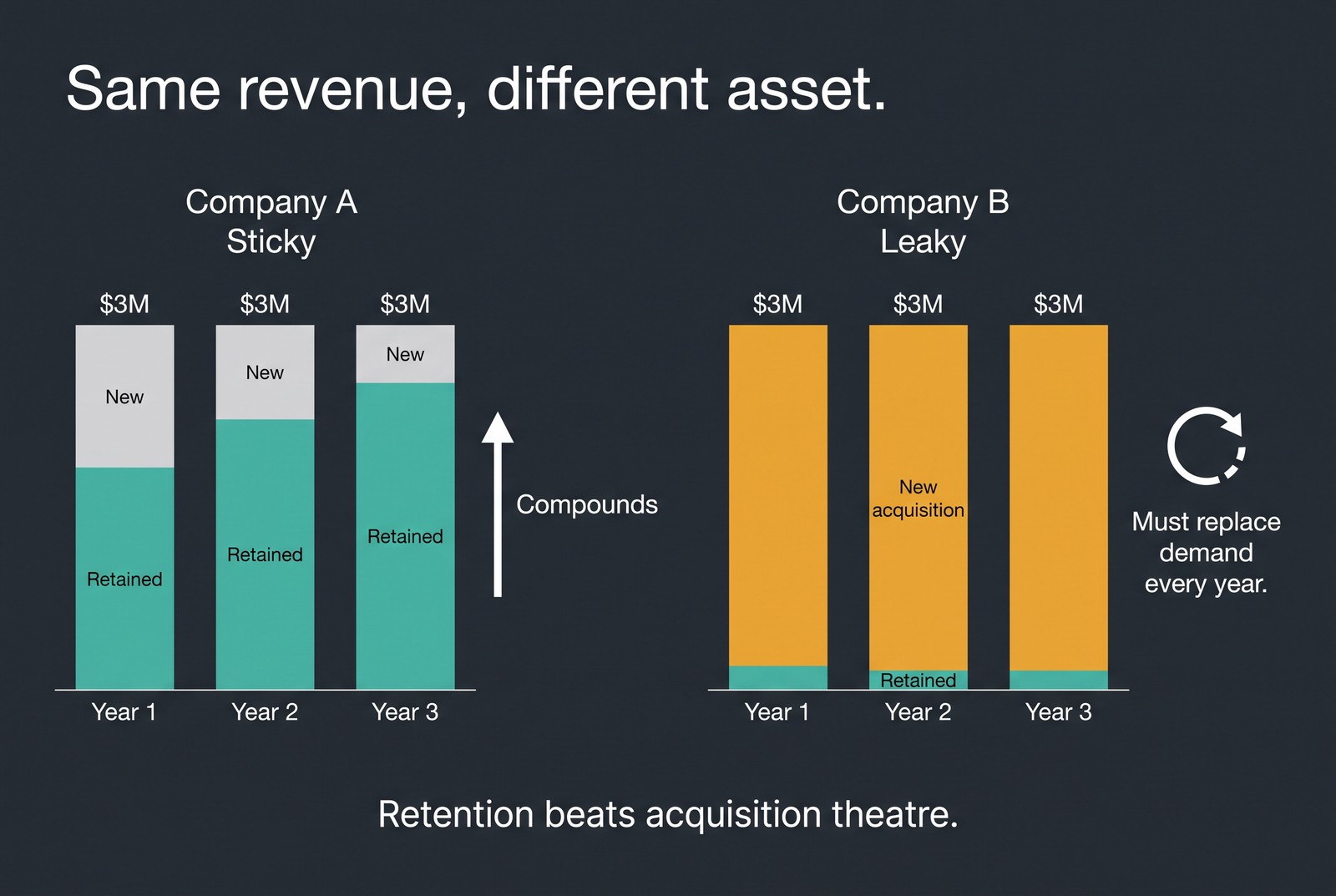
Company A vs Company B: both can show $3M in year three. B loses every cohort and must keep buying new demand; A keeps prior cohorts and compounds. Investors buy A. Pricing should track willingness to pay, not founder ego or “what I would pay.” Thin margins trap founders who cannot hire.
“No matter how dramatic the end result, good-to-great transformations never happen in one fell swoop. In building a great company or social sector enterprise, there is no single defining action, no grand program, no one killer innovation, no solitary lucky break, no miracle moment. Rather, the process resembles relentlessly pushing a giant, heavy flywheel, turn upon turn, building momentum until a point of breakthrough, and beyond.” — Jim Collins, The Flywheel Effect
Merits of the argument: the retention whiteboard is the strongest economic claim in the episode; unit economics and investor practice both back it. Long-horizon foundations match how durable firms actually compound. The pricing diagnosis (sell out of your own wallet) is accurate for early service businesses. The gap: stickiness is necessary but not sufficient; a sticky bad market still stalls. Pair retention with a market that can pay.
Hiring without unicorns
Biggest hiring mistakes · Why hiring is everything
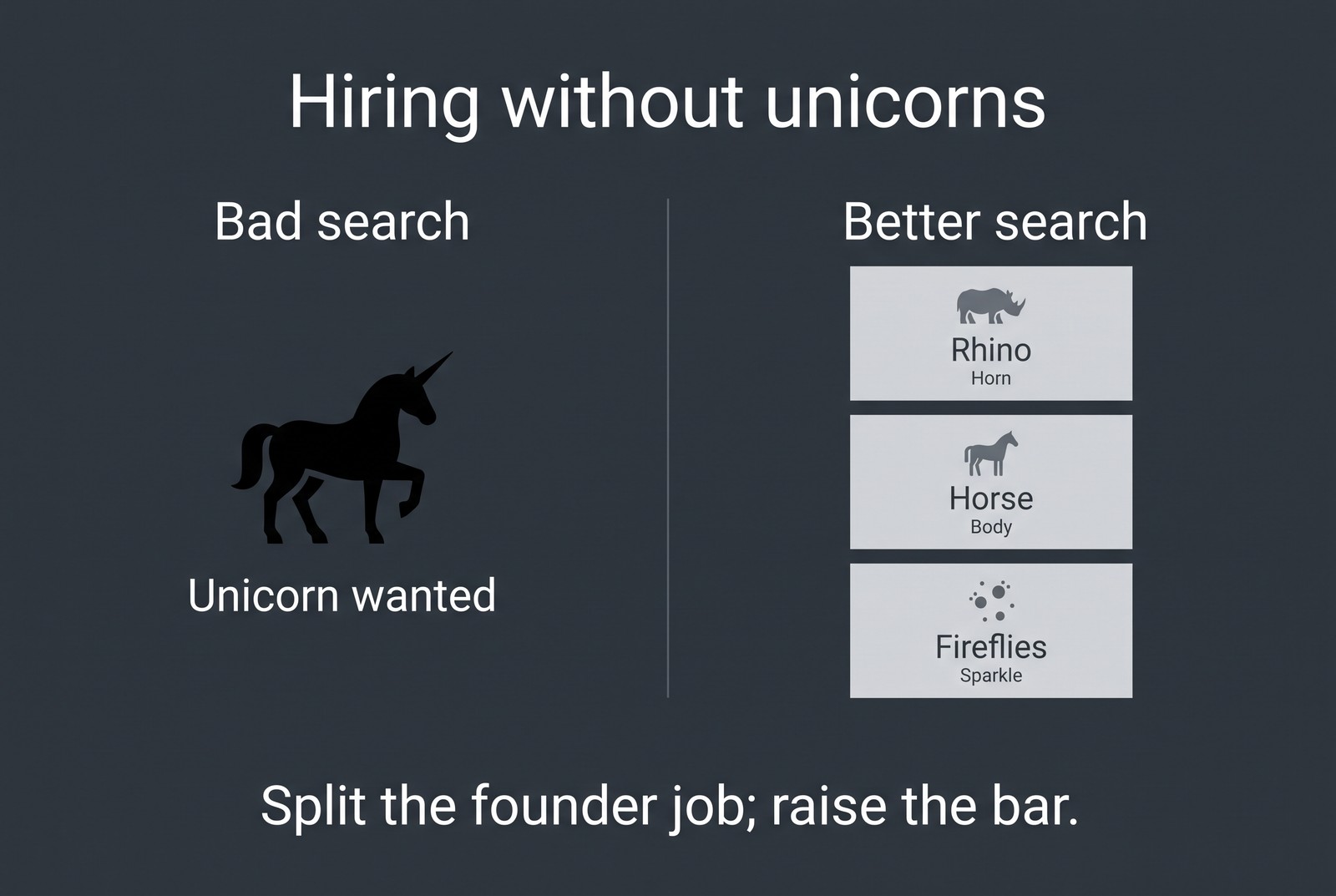
Searching for one person who replaces the founder’s entire life guarantees perpetual interviews. Split the job. “Nobody can do it like me” is often ego. Collapse training by teaching the corrected path. Raise the bar; lower tolerance for mediocrity. Treat talent acquisition with the same pipeline seriousness as customers. Referral bounties that pay pennies for six-figure gross-profit hires are self-sabotage.
Merits of the argument: the unicorn critique matches how early teams actually fail, and mirroring the customer pipeline onto hiring is a high-leverage operating insight. Referral economics (pay for the profit you capture) is sound. The risk is over-indexing on “hire more, sooner” when the offer is still mispriced; without margin, hiring just accelerates cash burn. Fix the offer economics first, then raise the talent bar.
Starting under uncertainty
Why starting feels hard · What to do differently · Uncertainty · Delay · Fit · Decision fatigue · Easier entry today · Hard ≠ valuable
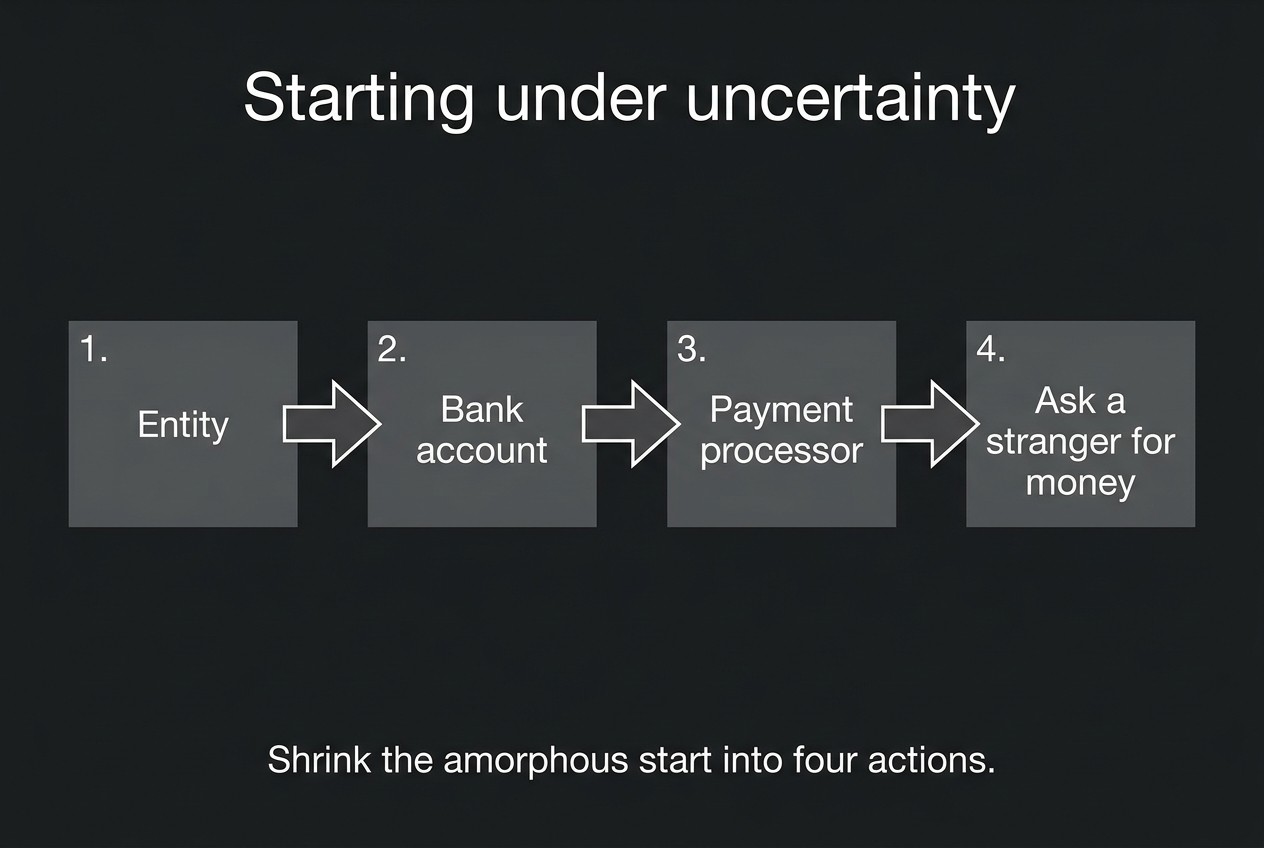
Shrink “start a business” to entity, bank account, payment processor, ask a stranger for money. Care more about your future than other people’s version of you. Fear is rational; write failure in specifics until it becomes logistics. Uncertainty multiplies with success. Name the two people whose judgment you fear. Reading without action is procrastination. Specify freedom until it changes Tuesday. Unmade decisions last forever. Lower entry costs do not create desire. Hard problems are not automatically valuable problems.
Merits of the argument: concrete start steps and “fear only in the vague” are excellent behavioural advice; they convert aspiration into operations. The warning that entrepreneurship is not for everyone is honest and raises credibility. The soft spot is survivorship tone: “just start” underplays capital, health, and dependent constraints. Use the four steps as a clarity tool, not as a moral judgment on people who correctly choose employment.
Credibility, content, and the value equation
Content moats · Credibility · Value Equation · Delayed gratification · Push vs pivot
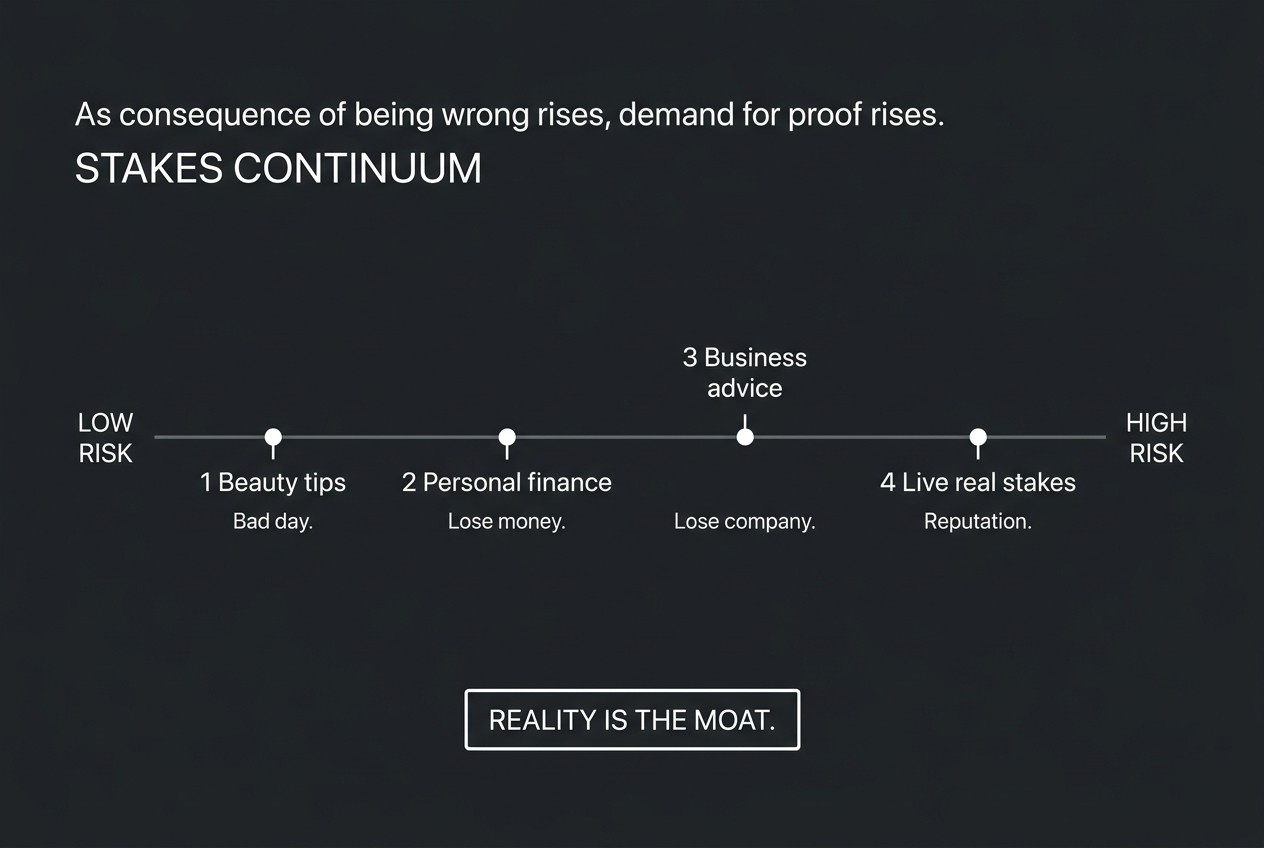
In a slop flood, moat = reality and reputation. Do what only you can do. Live stakes beat tip lists. As consequence of being wrong rises, demand for proof rises.
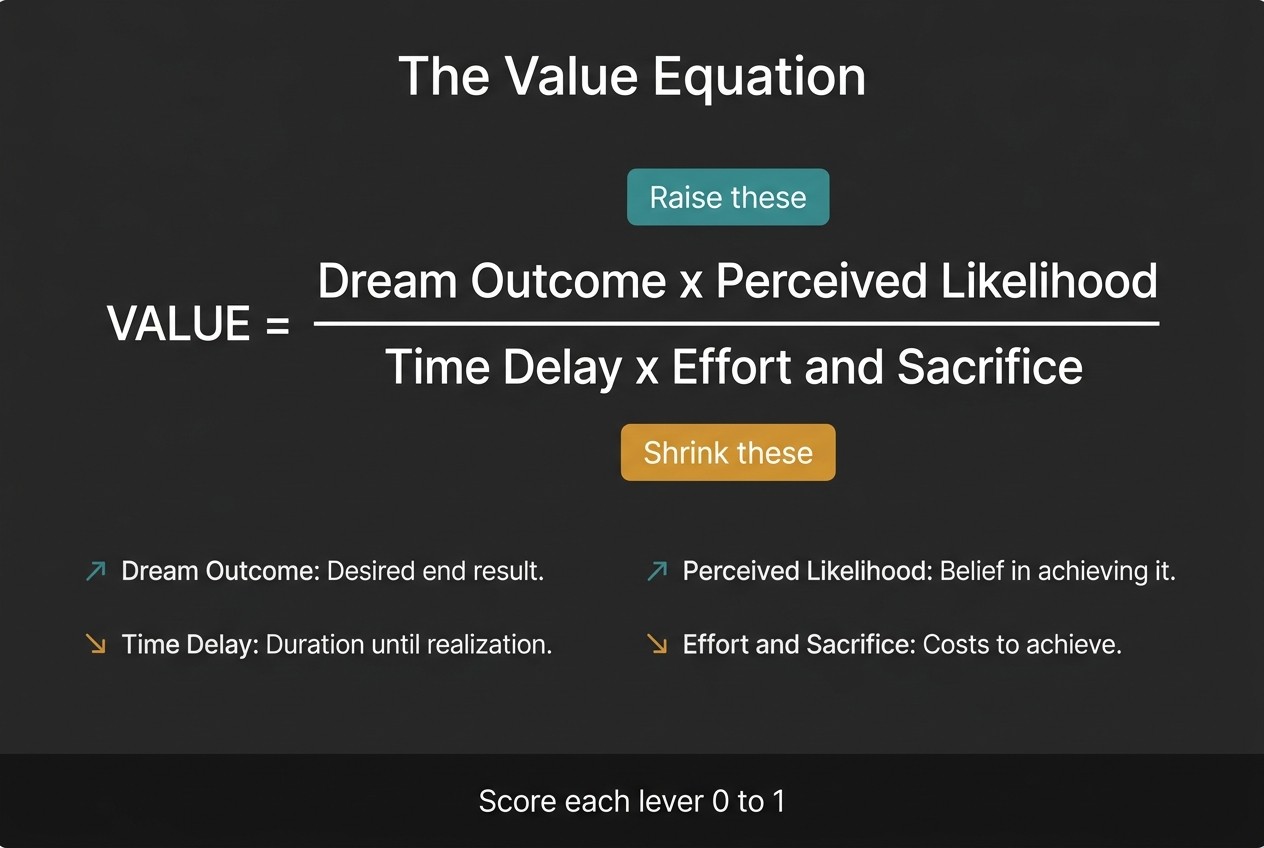
Value ≈ (Dream Outcome × Perceived Likelihood) ÷ (Time Delay × Effort and Sacrifice). Time-to-result is the slept-on lever. Push vs pivot: if a fundamental thesis is falsified, pivot; if it is only slower than ego wanted, push.
“People don’t buy what you do; they buy why you do it. And what you do simply proves what you believe” — Simon Sinek, Start with Why
| Stack | Why | Offer | Retention |
|---|---|---|---|
| Sinek only | Strong | Vague | Hope |
| Hormozi only | Optional | Irresistible | Afterthought |
| This lecture | Clear enough to hire and fire against | Scored on all four levers | Stays when ads pause |
Merits of the argument: “reality is the moat” is the right content strategy under AI supply shock, and the Value Equation is a useful scoring model for offers. Push-versus-pivot is a cleaner rule than motivation slogans. The incomplete half is Sinek’s: an irresistible offer without a why produces churn and brand emptiness. Score the equation, then still answer why anyone should care that you exist.
Scale, quit, and judgment
Must you be scalable? · Unscalable as a gift · When to quit · Self-awareness · Stop planning
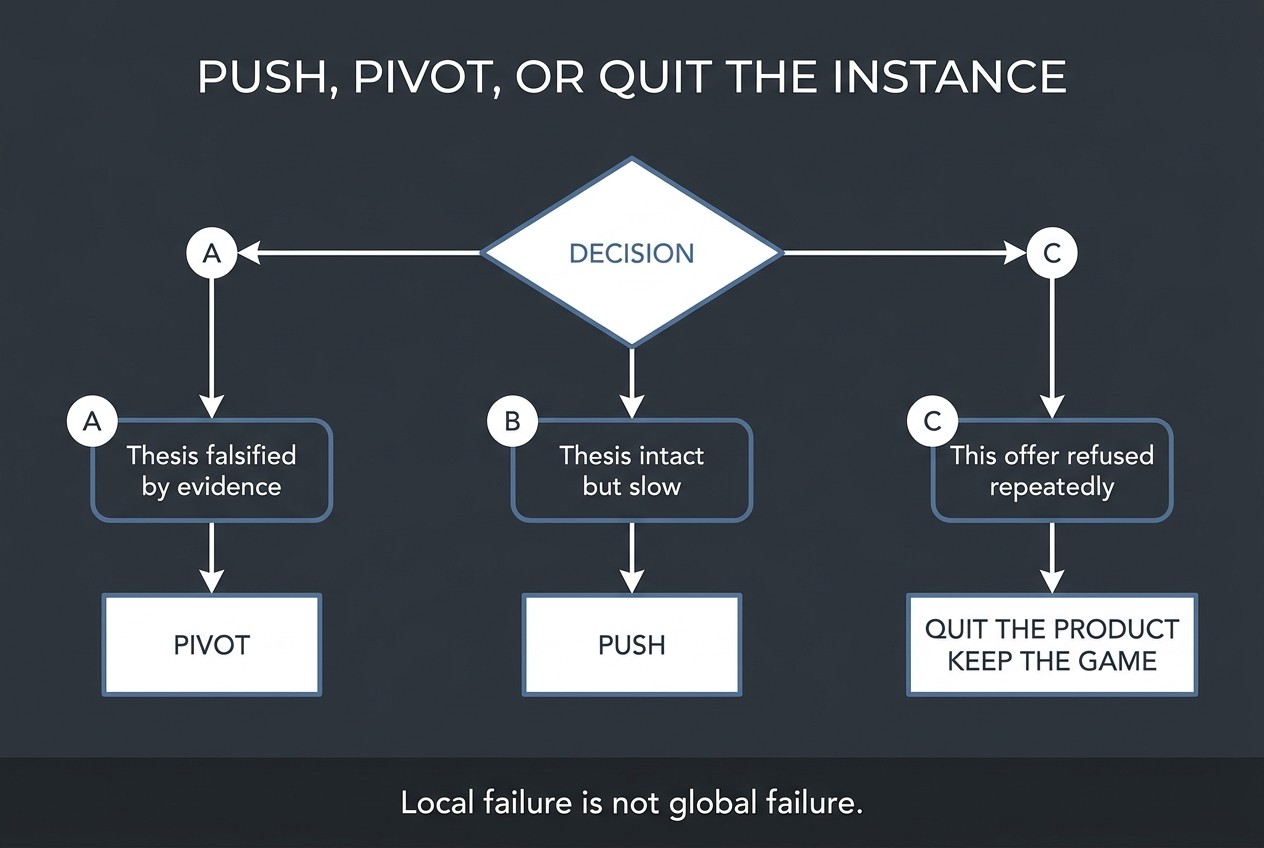
Beginners say “not scalable” while broke. Unscalable premium work funds learning and richer customers; productise downward later. Quit the doggy skateboard; do not quit business. Local failure ≠ global failure. Self-awareness is judgment: arrange incentives so the desired action is easiest; raise test volume. Talkers ask for opinions; operators show what they have done.
Merits of the argument: unscalable-first is excellent advice for services and matches how many real premium brands ladder down. Distinguishing local versus global failure prevents identity collapse after normal iteration. The judgment-as-behaviorism frame is useful and under-taught. Caveat: “just do more volume” can become sunk-cost theatre if the measurement loop is wrong. Pair volume with a clear kill criterion.
Incentives and who you serve
Incentives and audience · Ideas that will not change · Sell upmarket · Employees and customers share one pipeline
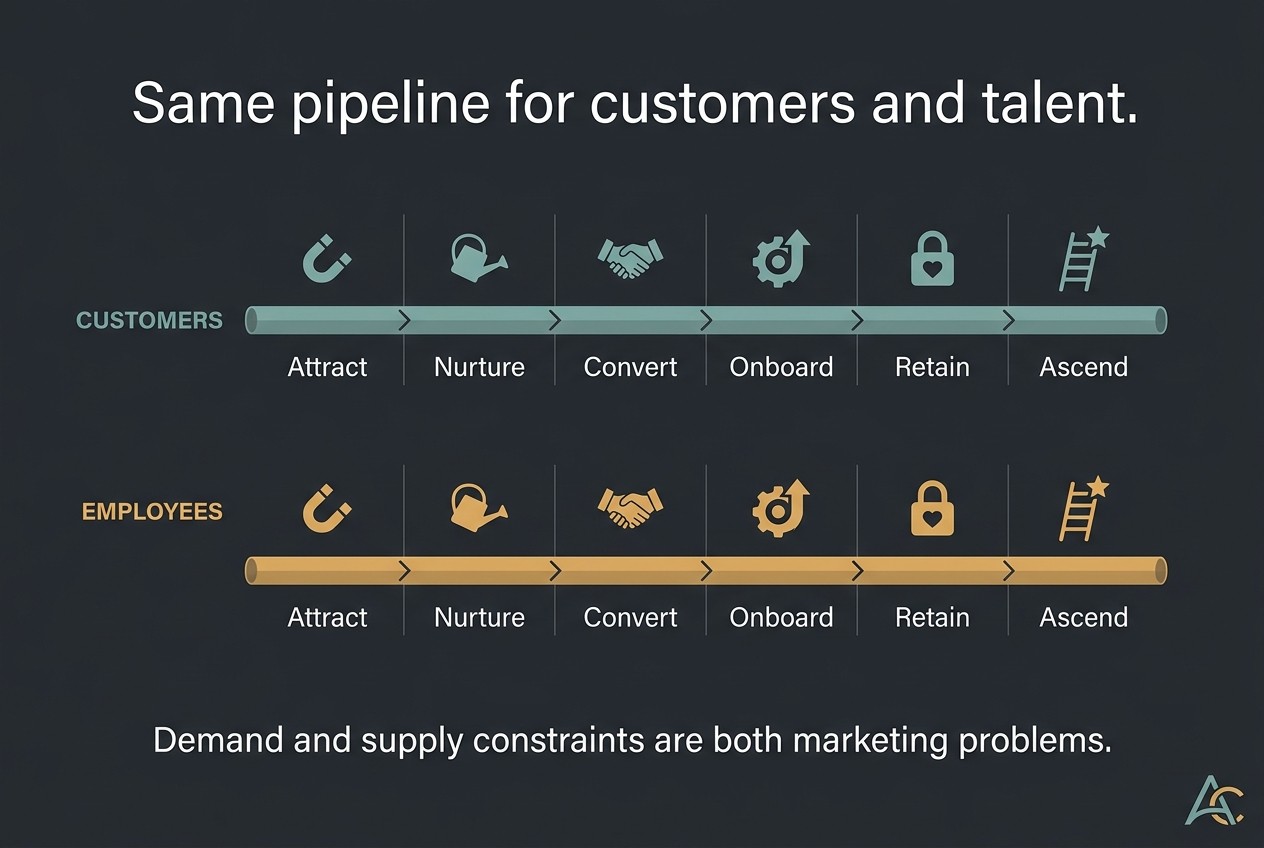
Humans act inside incentives; pep talks without structural change fail. Channel demand, do not invent it. Highest-leverage choice: who do I serve? Bet on what will not change (looks, wealth services, insurance, uncool cashflow). Sell to people with more money; price signals maturity. Demand constraint and supply constraint are both marketing problems: run the same pipeline for talent as for customers.
Merits of the argument: incentive-first thinking is the most transferable management idea in the episode, and the employee/customer isomorphism is genuinely useful. Upmarket advice is directionally right for services. Limits: “sell to rich people” needs a path to credibility, and uncool markets still need operational skill. The pipeline mirror works best once you already know how to sell or how to hire; copy the stronger of the two onto the weaker.
If AI gets much stronger
Closing segment: superintelligence timelines and what still compounds
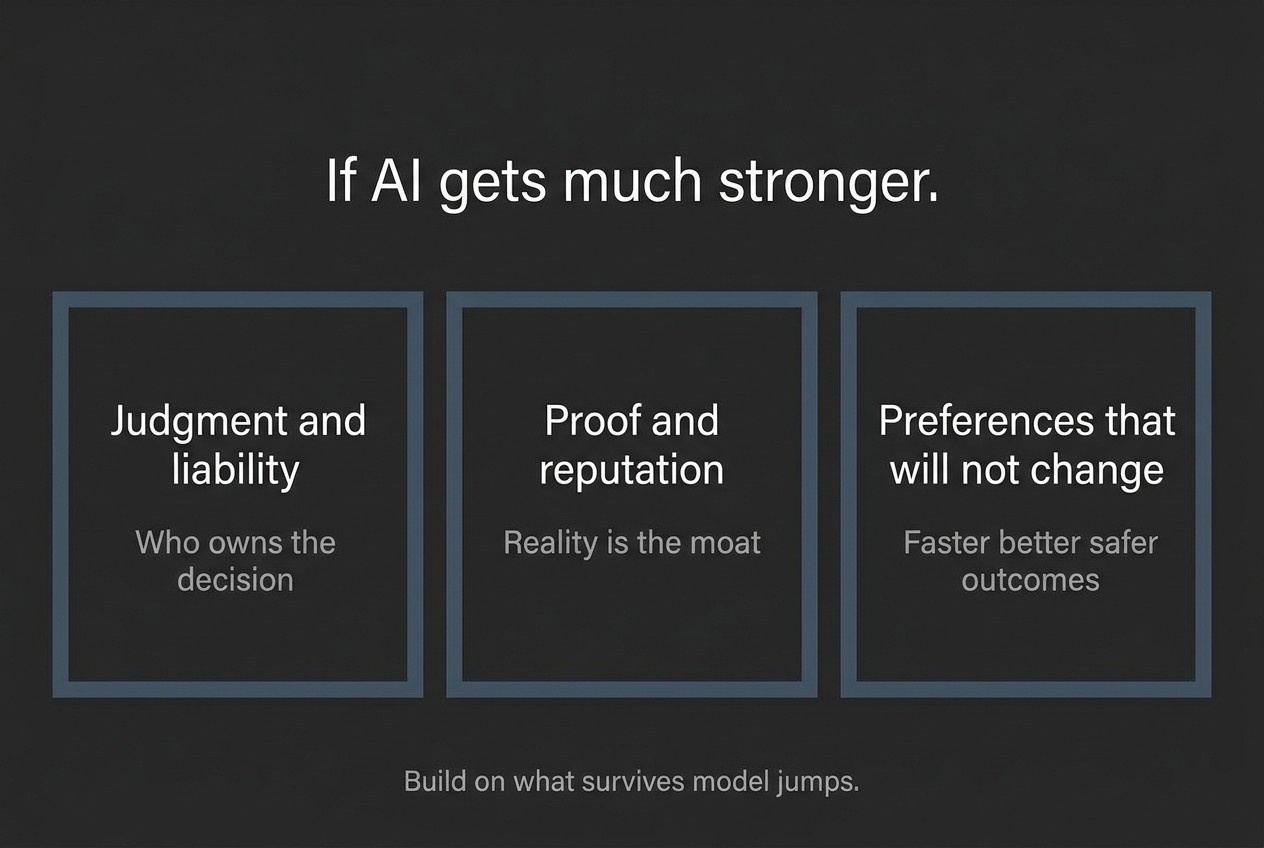
Even under aggressive timelines, someone still owns decisions, capital, and reputation until law and social structure say otherwise. Build for preferences that survive model jumps: faster outcomes, less risk, proof, human accountability. That is Bezos’ “what won’t change” under an AI shock.
Merits of the argument: as a planning heuristic it is strong: durable customer preferences beat narrative about tomorrow’s model. As a forecast of AGI politics and labour it is incomplete, and the episode does not pretend otherwise. Use it to prioritise moats you can build this year, not to settle the AGI debate.
What to check right now
- Money filter: each AI project → incremental profit.
- Retention: 90-day cohort health.
- Offer score: dream, likelihood, delay, effort; fix the weakest.
- Hiring mirror: does talent get customer-grade pipeline quality?
- Market altitude: still selling only to peers with no money?
- Push vs pivot: falsified thesis, or just slow?
- Why + offer: clear purpose and an offer people feel stupid refusing.
Video attribution
Full conversation: Alex Hormozi on The Diary Of A CEO. Personal chapters omitted on purpose.
Related: Sinek TED, Thiel CS183, Collins flywheel, You Are Not Behind.
nJoy 😉