
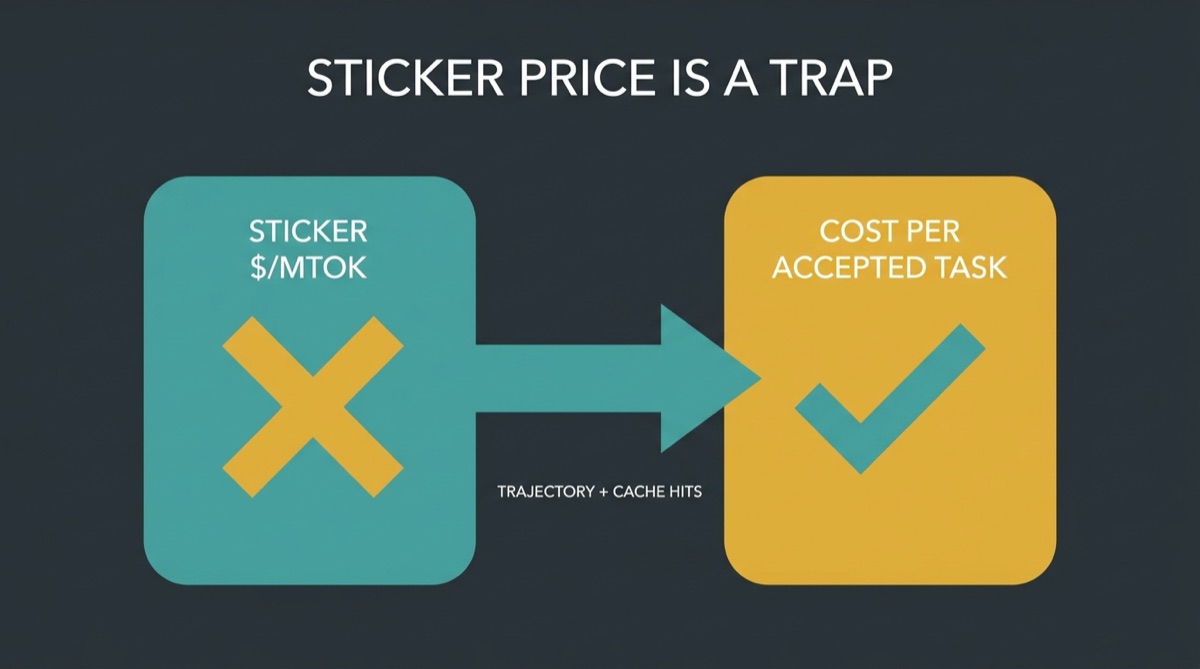
OpenAI did not ship one GPT-5.6. It shipped a pricing ladder with three durable names – Luna, Terra, and Sol – plus new API levers that punish teams who still point every agent turn at the flagship alias. The crush narrative is “Sol wins everything.” OpenAI’s own tables disagree on SWE-Bench Pro. The useful narrative is the same one we argued for open models in Kimi K3 Without the Crush Narrative: measure cost per accepted task, route by step, and stop treating sticker $/MTok as strategy.

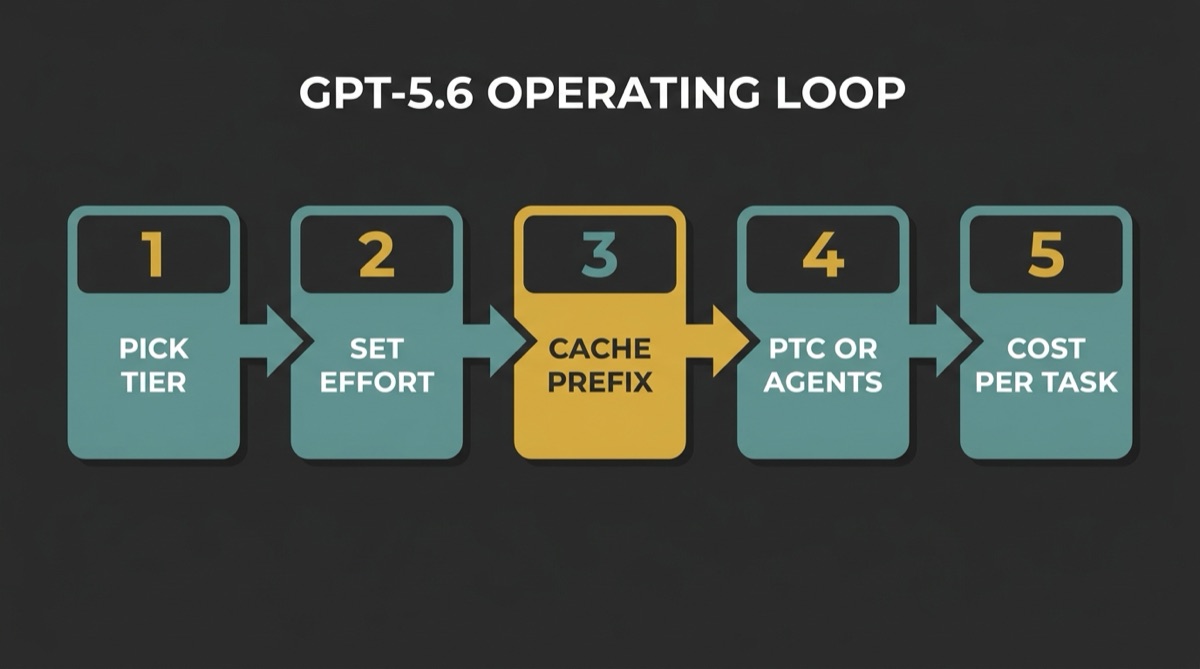
Three tiers, one generation number
Sol · Terra · Luna · alias traps
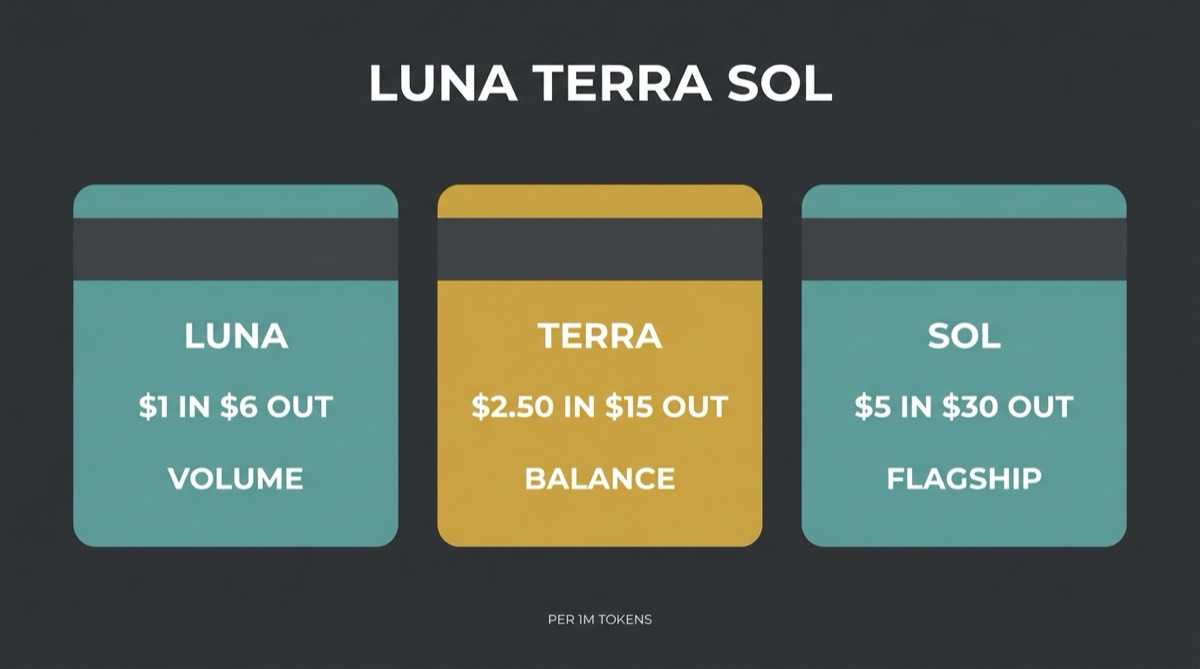
OpenAI’s launch post is explicit about the family shape. Sol is the flagship. Terra is the everyday balance. Luna is the cost-efficient lane. The generation number (5.6) and the tier names can move on different cadences, which is a quiet admission that “always buy the newest slug” is the wrong procurement habit.
“We’re launching the GPT-5.6 family of models for general availability following our limited preview: our new flagship, Sol, alongside Terra, a balanced model for everyday work, and Luna, our most cost-efficient model.” – OpenAI, GPT-5.6 announcement
API naming makes the trap concrete. OpenAI’s Using GPT-5.6 guide states that the bare gpt-5.6 alias routes to gpt-5.6-sol, and that you should use gpt-5.6-terra for strong performance at a lower price and gpt-5.6-luna for efficient, high-volume workloads. Teams that “upgrade the model string” without reading that page accidentally buy flagship on every call.
“API: Developers can access Sol, Terra, and Luna through the OpenAI API. In the Responses API, Programmatic Tool Calling lets GPT-5.6 write and run programs in-memory that coordinate tools and process intermediate results, making it Zero Data Retention (ZDR) compatible. Multi-agent, initially available in beta, lets GPT-5.6 run concurrent subagents and synthesize their work in a single request.” – OpenAI, GPT-5.6 availability
Merits of the argument. The three-tier story is primary-sourced and operationally useful. Weak point: OpenAI’s marketing still leads with Sol benchmarks. Your router must ignore the hero chart and bind each workflow step to a tier with an eval set, the same discipline as Stop Sending Every Prompt to Your Flagship Model.
List price is not the bill
Sol $5/$30 · Terra $2.50/$15 · Luna $1/$6 · cache writes
Official list pricing per million tokens: Sol $5 input / $30 output; Terra $2.50 / $15; Luna $1 / $6. That ladder only matters after you multiply by tokens actually burned at each reasoning effort, plus cache economics.
“GPT-5.6 is priced per 1M tokens across three model sizes: Sol is $5 input / $30 output; Terra is $2.50 input / $15 output; and Luna is $1 input / $6 output. GPT-5.6 also introduces more predictable prompt caching, including support for explicit cache breakpoints and a 30-minute minimum cache life. For GPT-5.6 and later models, cache writes are billed at 1.25x the model’s uncached input rate, while cache reads continue to receive the 90% cached-input discount.” – OpenAI, GPT-5.6 availability and pricing
Cache writes at 1.25× mean a naive “dump the whole repo into every request” pattern now has a first-hit tax. Explicit breakpoints help when your system prompt is stable; they hurt when you rewrite the prefix every turn. Instrument cached_tokens and cache_write_tokens, not only blended $/MTok.
OpenAI’s own efficiency pitch is Agents’ Last Exam and the Artificial Analysis Intelligence Index: Sol leads or nearly ties Fable on some suites while claiming large time and cost cuts; Terra and Luna are sold as beating Fable at roughly one-sixteenth the estimated cost on that professional-workflow eval. Treat those as vendor-measured ceilings until you reproduce them on your harness.
Merits of the argument. Cost-per-task remains the right unit. The new cache-write multiplier makes prefix hygiene a finance control, not a nicety. Weak point: “one-sixteenth the cost” is OpenAI’s estimate on their eval, not your invoice.
Programmatic tools vs multi-agent
PTC · ultra · beta coordination · when not to fan out
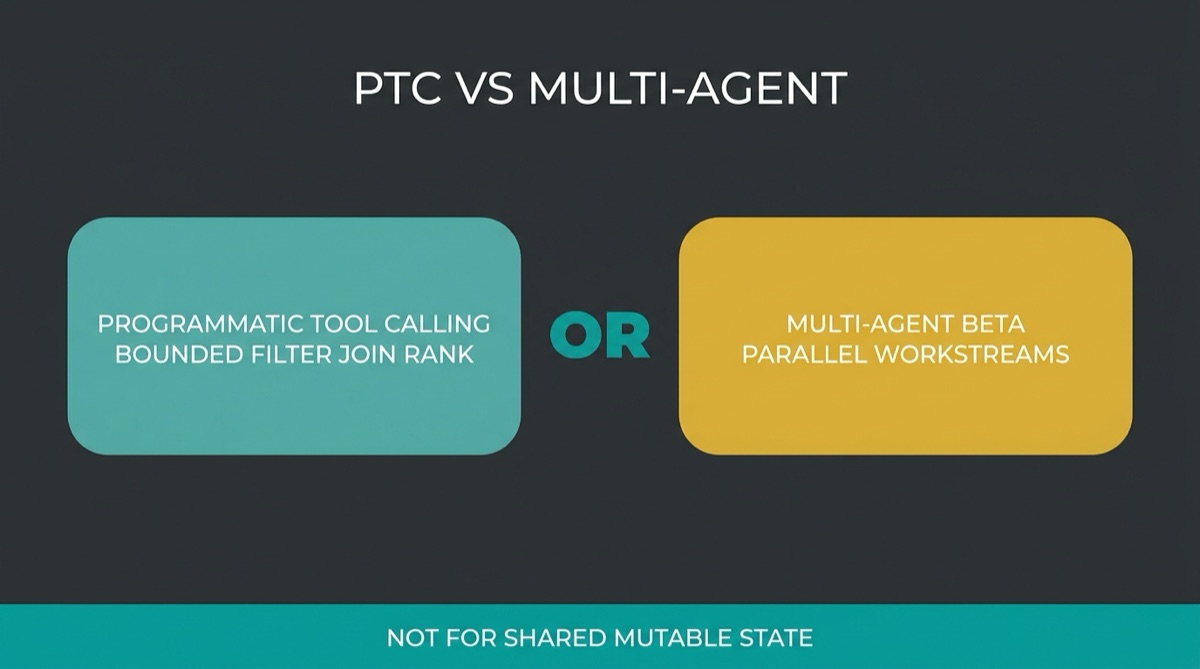
Two API features change agent architecture. Programmatic Tool Calling lets the model write and run lightweight programs that coordinate tools and shrink intermediate data before the next model judgement. Multi-agent (beta) lets a root agent spawn concurrent subagents and synthesise results – the API shape behind Codex “ultra,” which defaults to four parallel agents on hard tasks.
“GPT-5.6 can write and run lightweight programs that coordinate tools, process intermediate results, monitor progress, and choose the next action as work unfolds.” – OpenAI, GPT-5.6 announcement
“Multi-agent lets a GPT-5.6 instance coordinate multiple subagents in parallel and synthesize their results. Similar to ultra mode in Codex, this can reduce wall-clock time and improve performance for complex tasks that divide cleanly into independent workstreams. Multi-agent is available as a beta feature in the Responses API as we iterate on developer feedback.” – OpenAI API, Using GPT-5.6
Operating rule: use PTC when the middle of the workflow is filtering, joining, ranking, or validating tool outputs without fresh semantic judgement each hop. Use multi-agent when workstreams are truly independent. Do not enable multi-agent as a default personality – shared mutable state and approval gates still need the isolation discipline from Multi-Agent Coordination in 2026.
Merits of the argument. Baking subagents and hosted tool programs into the Responses API is a real platform shift. Weak point: beta multi-agent will change; design for the pattern, not today’s request field names alone.
Read the table before you trust the thumbnail
Agents’ Last Exam · AA Index · SWE-Bench Pro · Mythos
OpenAI highlights Agents’ Last Exam and Artificial Analysis coding/intelligence indices where Sol looks strong on efficiency. The same announcement table lists SWE-Bench Pro at 64.6% for Sol against 80% for Claude Fable 5 (and higher still for Mythos). That is not a footnote; it is why routing beats fan wars. Use Sol where your eval says Sol wins. Keep a closed or open specialist lane where Fable, Mythos, or an open MoE wins. Re-measure after every harness change.
Merits of the argument. Publishing the weaker SWE-Bench Pro number next to the hero charts is useful honesty. Weak point: every lab’s harness differs; your production suite is the only score that pays salaries.
Case 1: Alias-as-upgrade
A team replaces gpt-5.5 with gpt-5.6 overnight. Every batch job silently becomes Sol at max-friendly defaults. Bill triples; quality barely moves on classification traffic. Fix: pin Luna or Terra for volume paths; reserve Sol + higher effort for the merge/review lane.
Case 2: Cache-write tax
An agent rebuilds a 40k-token system prompt each turn with a fresh timestamp. Every request pays 1.25× write and never reads. Fix: stable prefix, explicit breakpoints, variable content at the end.
Case 3: Multi-agent on a serial bug
Four subagents edit the same file tree without isolation. You get four conflicting patches and a green CI that tests none of them. Fix: one writer, parallel readers only, or separate worktrees – same playbook as turf-war incidents.
How to migrate this week
- Inventory calls still on the bare
gpt-5.6alias. Split into Luna / Terra / Sol queues with owners. - Freeze a 30-50 task eval set that mirrors production (not the vendor chart).
- Baseline cost per accepted task at current effort; then try one effort level lower on Terra/Luna.
- Enable prompt-cache metrics; move static instructions and tool schemas into a stable prefix.
- Pilot PTC on one bounded tool-heavy job; pilot multi-agent only on cleanly parallel research/coding splits.
- Document approval boundaries in the system prompt once – OpenAI’s own guidance warns that repeated “ask first” lines cause unnecessary pauses.
When a single flagship is actually fine
Low volume, high stakes, one human in the loop, and no stable prefix to cache: Sol at a measured effort can be simpler than a router. Do not build a Luna/Terra mesh for a ten-call-per-day internal tool. Build the router when spend or latency forces the conversation.
What to check right now
- Which model id is on your hottest endpoint – alias Sol, or an intentional tier?
- Do you log cache writes vs hits?
- Is multi-agent enabled anywhere without isolation?
- Does your scorecard include a task family where Fable or an open model still wins?
Sources and references
Primary links for every quotation and load-bearing number in this dossier. Verify before you reuse a figure elsewhere.
- OpenAI – GPT-5.6 announcement – family definition, pricing, PTC description, Agents’ Last Exam / AA claims, SWE-Bench Pro table, ultra/multi-agent framing, cache write/read multipliers
- OpenAI API – Using GPT-5.6 – alias routing to Sol, Terra/Luna guidance, PTC and multi-agent feature summary, reasoning efforts, cache billing notes
- OpenAI API – Prompt caching – explicit breakpoints and GPT-5.6 cache-write pricing detail
- OpenAI API – Multi-agent – beta behaviour for subagent trees
- OpenAI – GPT-5.6 system card – safety and capability evaluations
- Simon Willison – The new GPT-5.6 family – secondary synthesis of GA day pricing and API features (not used for verbatim blockquotes above)
nJoy 😉