
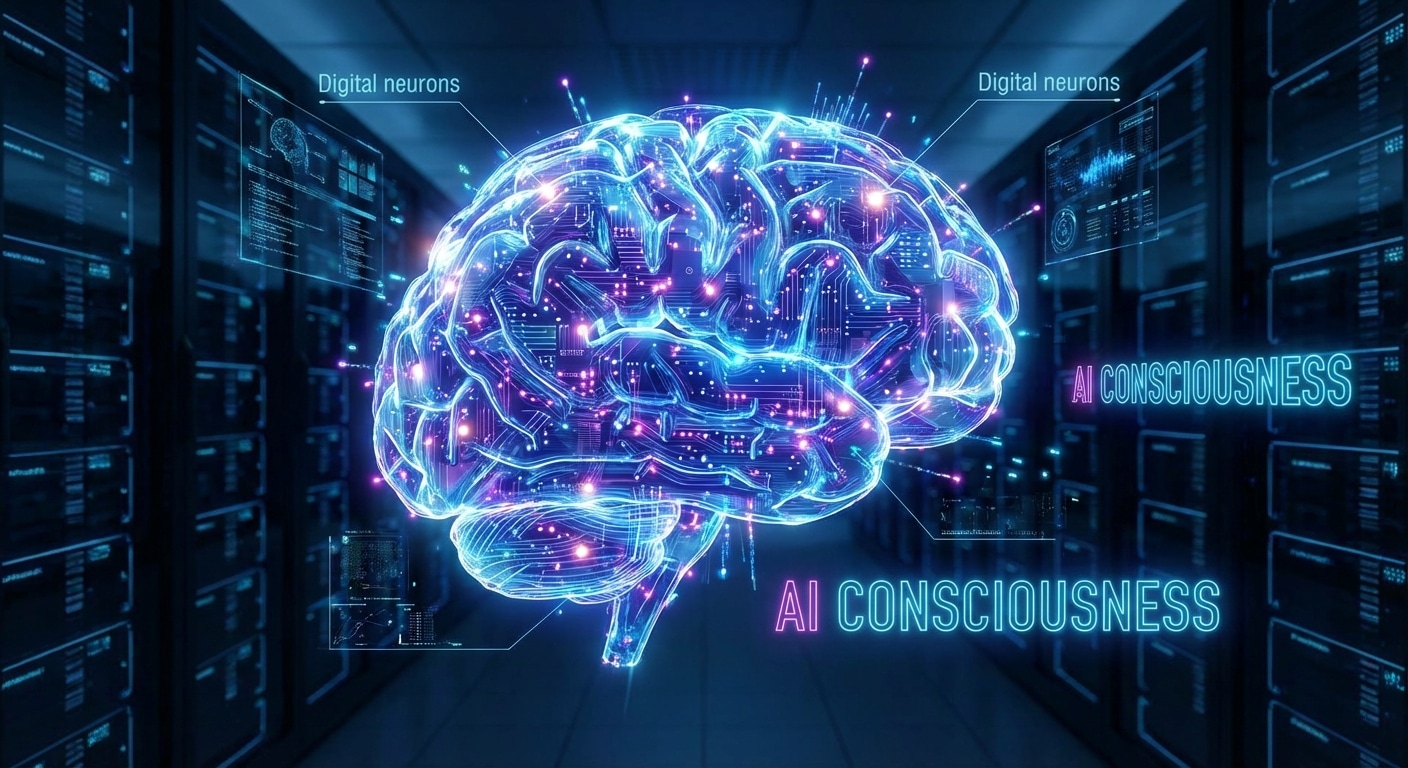
The Digital Brain: Biological vs Artificial
Artificial Intelligence attempts to replicate human cognition in machines. Both biological and artificial neurons share fundamental principles: receiving multiple inputs, having activation thresholds, and strengthening connections through repeated use. However, implementation differs dramatically between organic brain computing and silicon-based AI processing.
The human brain contains 86 billion neurons connected by trillions of synapses, operating massively parallel while consuming only 20 watts. Training large AI models requires megawatts. Biological neurons communicate through electrochemical signals with complex temporal dynamics. Artificial neurons use simplified mathematical functions on numerical inputs.
Current AI lacks consciousness and genuine understanding. These systems recognise patterns and generate statistically likely outputs, but do not truly comprehend meaning. Large language models write poetry and solve problems without subjective experience or awareness. This distinction defines both AI capabilities and limitations.
Artificial General Intelligence matching human cognitive abilities across domains remains distant and uncertain. While narrow AI excels at specific tasks, replicating human flexibility and creativity presents challenges we barely understand. The brain-AI comparison inspires while humbling us about how much remains to learn.