
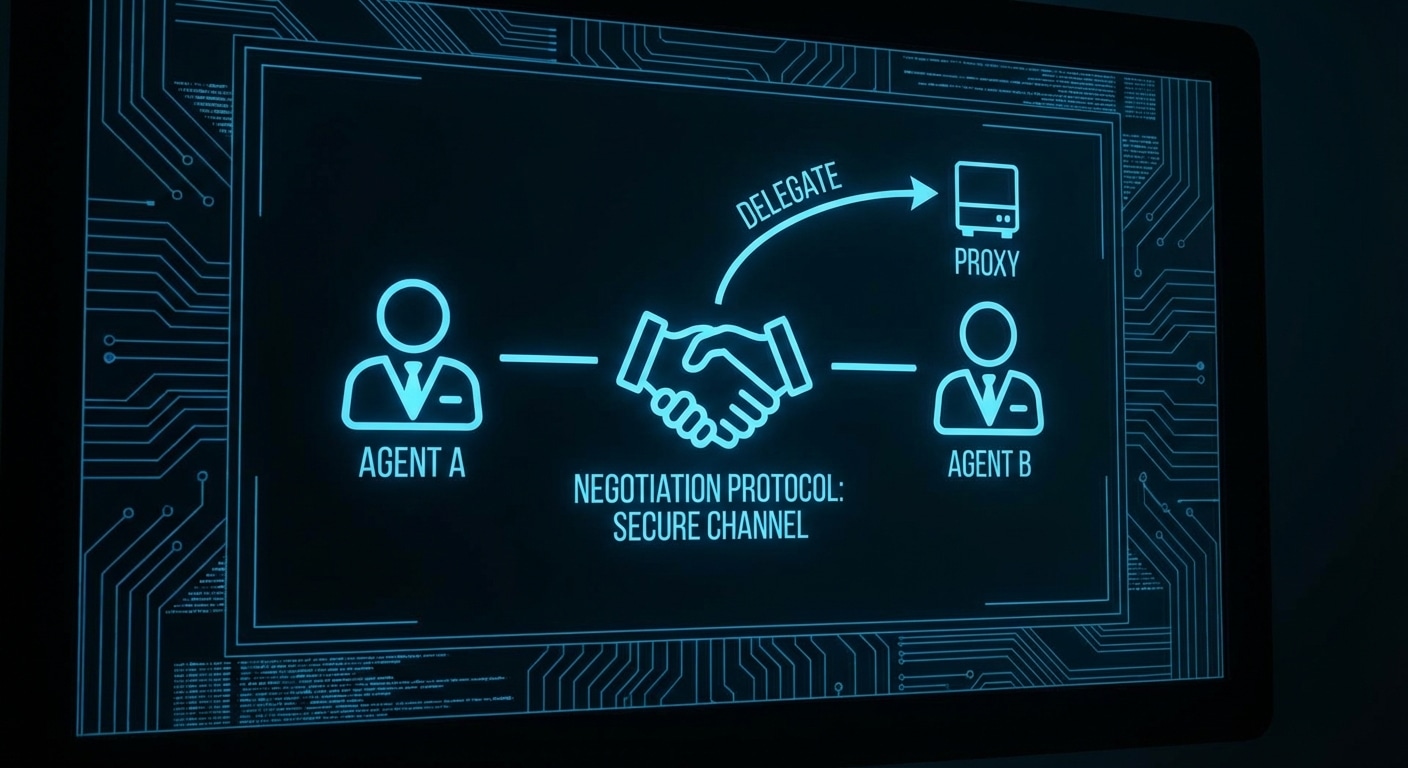
A2A stands for Agent-to-Agent protocol. It’s a way for one AI agent (or assistant) to delegate work to another — for example, a “planner” agent that hands off a research task to a “researcher” agent and then gets a result back. The idea is to standardize how agents discover each other, describe capabilities, and exchange requests and responses so that multi-agent systems can be composed without every team building custom glue.
In practice A2A defines how an agent advertises what it can do (e.g. “I can answer questions about X” or “I can run tool Y”) and how another agent (or orchestrator) sends a request and gets a response. That might be over HTTP with a standard envelope: request ID, from/to, payload, and maybe a deadline or priority. The response might be a direct answer or a reference to a longer-running task that the caller can poll for.
Negotiation and delegation mean the caller can choose among several agents (e.g. by capability or load) and the callee can accept, reject, or redirect. That’s useful when you have multiple specialized agents and want the system to route work automatically. Trust and auth are part of the design: the caller needs to know the callee is who it claims to be, and the callee may enforce quotas or policies.
A2A is still emerging; different frameworks and vendors are proposing similar ideas. The core value is the same as MCP for tools: one protocol so that agents from different builders can work together. Expect to see A2A (or something like it) in products that position themselves as “agent platforms” where you plug in multiple agents and an orchestrator routes and composes them.
Expect more formal specs and implementations. The real test is whether multiple vendors and open-source projects adopt the same protocol.
nJoy 😉